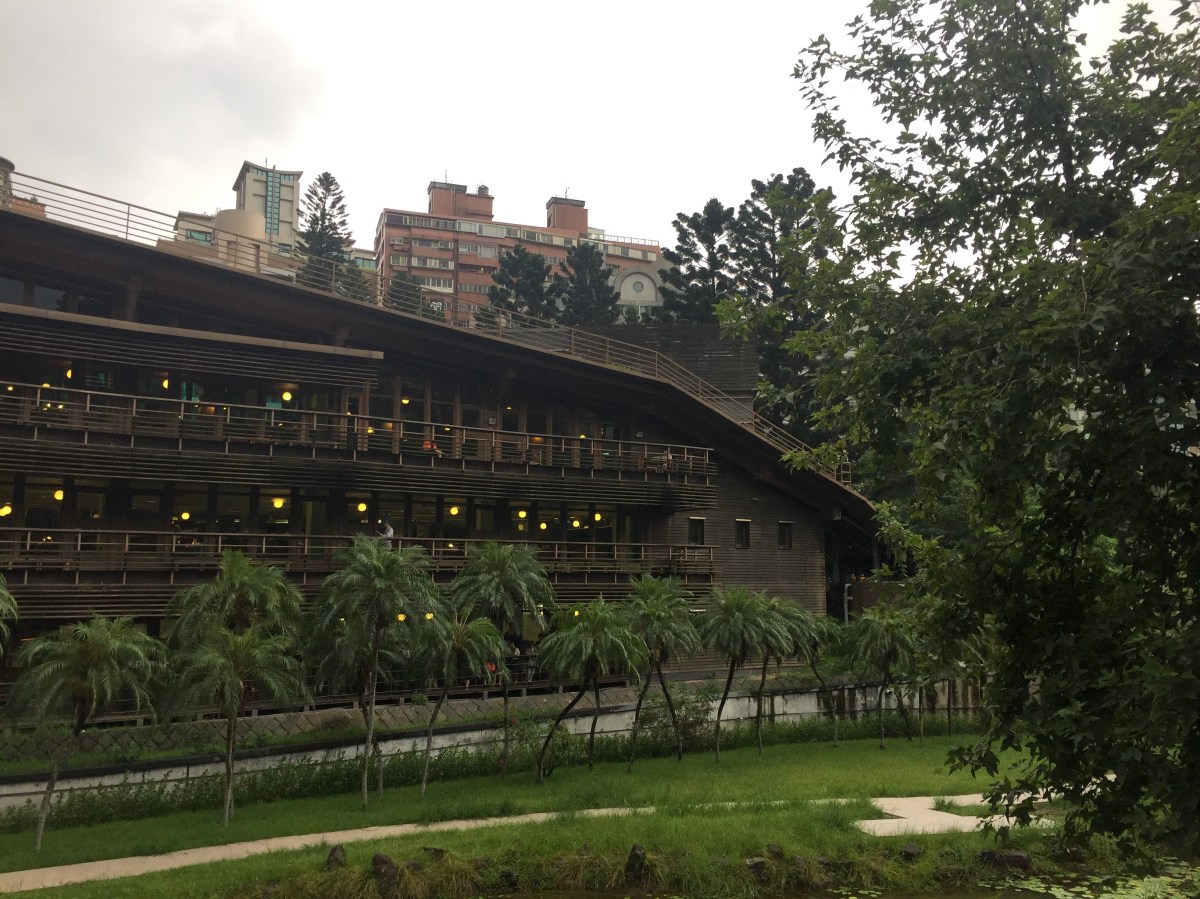
One of my favorite day trips within Taipei City was a visit to Beitou Park. The park is north of Taipei and close to Yangmingshan National Park. While researching the park, I didn’t have high expectations but was pleasantly surprised by this peaceful park.
Getting to Beitou Park
It is easy to get to Beitou via the MRT. Accessibility is always one of my considerations when planning trips. In Taipei, I preferred riding the MRT over taking the bus because it is easier to navigate. To get to Beitou from Taipei Main Station, take the Red Line towards Tamsui. At the Beitou Station transfer to the Pink Line and ride to the end of the line which is the XinBeitou Station. The entrance to the park is across the street to the east.
Things to See and Do in Beitou Park
The park is a long, narrow strip of land with a creek running through the majority of it. If you start at the west entrance near the MRT station, you will find points of interest in this order.
Taipei Public Library, Beitou Branch
The library in the park is gorgeous. Three stories tall, with porches that overlook a waterlily pond, I wish I had found this gem earlier in my visit to Taipei.
It has a solemn friendliness. The interior is primarily warm wood with low bookcases that allow light from the windows to illuminate each floor. There are plenty of tables and armchairs for reading or studying. I even spotted books in English. It would be easy to spend hours tucked in a corner reading or journaling.
Beitou Hot Springs
Our next stop was the hot springs. We wanted to stop at the Beitou Hot Springs Museum, but it was closed for maintenance during September 2017. The public hot springs area was developed in the mid-nineties. There are private hot springs that are nicer if you want to pay the extra money. But if you really want to fully engage with the experience, the public hot springs are the way to go. The weather the day we were there was warm, as is usually during September, but was raining and made the hot springs still enjoyable.
Before entering the public hot springs area, you have to buy a pass from a vending machine at the entrance. There is a small shop to buy swimwear if you didn’t bring any or if what you bought doesn’t meet their criteria. Most women’s swimwear is acceptable. For men, there are a few more rules, one of which is no pockets. The lady at the turnstile into the pool area was friendly and spoke a little English. The six rock pools are on a three-level terrace, all enclosed with delightful plants and a fence for privacy. Unfortunately, photos are not allowed in the pool area, so it is hard to show exactly what it looks like. After taking a quick shower, and storing our belongings in the provided lockers, we surveyed the pools to pick out the best one for the initial dip. Most of the other bathers were elderly locals and other western tourists. Each pool had a sign indicating the temperature. On the top level of the terrace were the hottest pools, and to the side were two small pools with lower temps to help cool off after sitting in the hot pools. We picked a warm pool and after rinsing off our feet with the plastic pots sitting at the edge of the pool we entered the pool and enjoyed the warm, relaxing water.
Thermal Pool
After enjoying the hot springs, we walked to the thermal pool, the source of the hot water flowing through the hot springs. This sulfur hot spring can reach boiling and emits stem even in the middle of summer.
Dinner at Sushi Express
After exploring the park and relaxing in the hot springs, we were starving. Fortunately, there is a Sushi Express across the street from the park near the MRT Station. I love Sushi Express. As someone with multiple food allergies, I appreciate the simplicity of sushi. It is easy to identify exactly what you are eating. And there is an unlimited supply of green tea. We wrapped up our day right when schools let out for the day and made our way home surrounded by chattering children in their school uniforms.


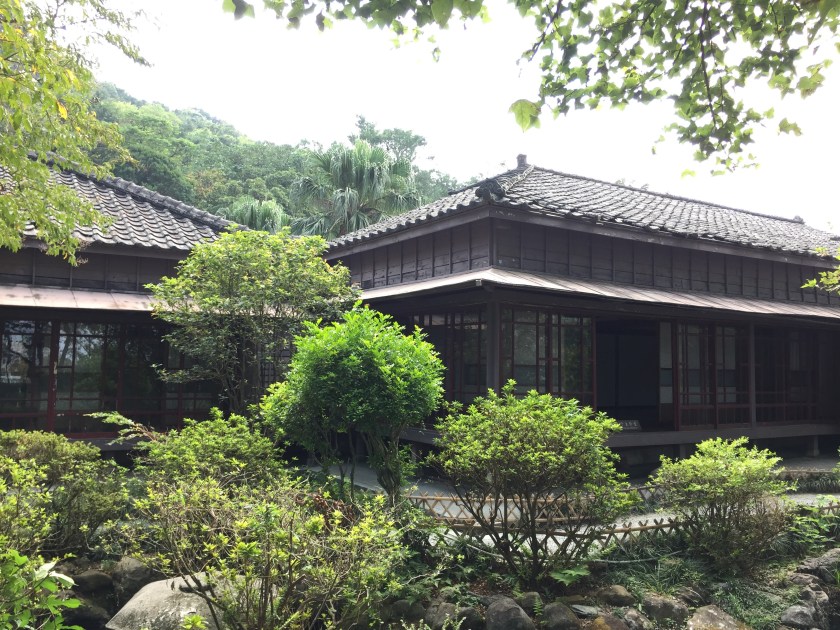 We decided to not visit the museum, as my attention span in museums is very short and I would rather spend time outdoors. Instead, we walked around the gardens and enjoyed the view of the village in the valley and the ocean in the distance. After we had our fill of the gardens we hopped on the bus for a short ride to Old Jiufen where the night market happens.
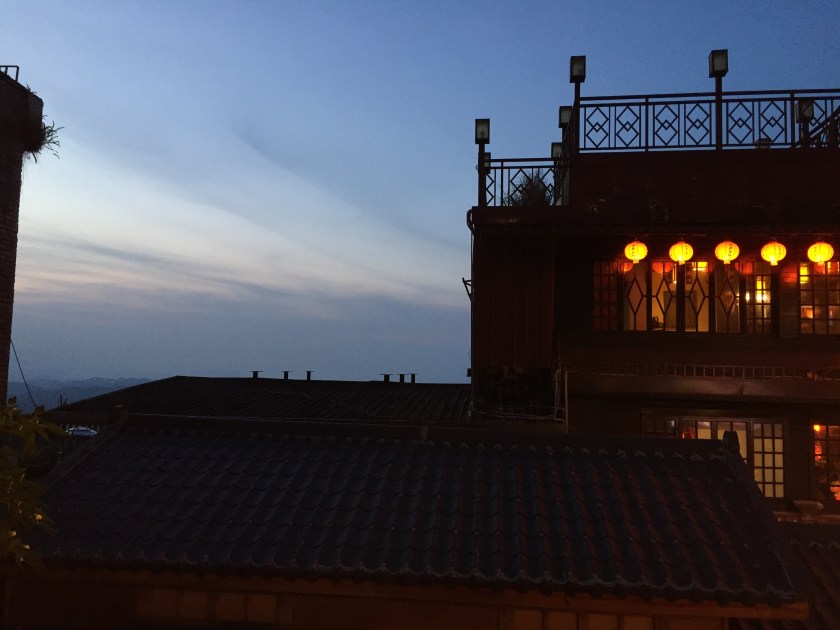
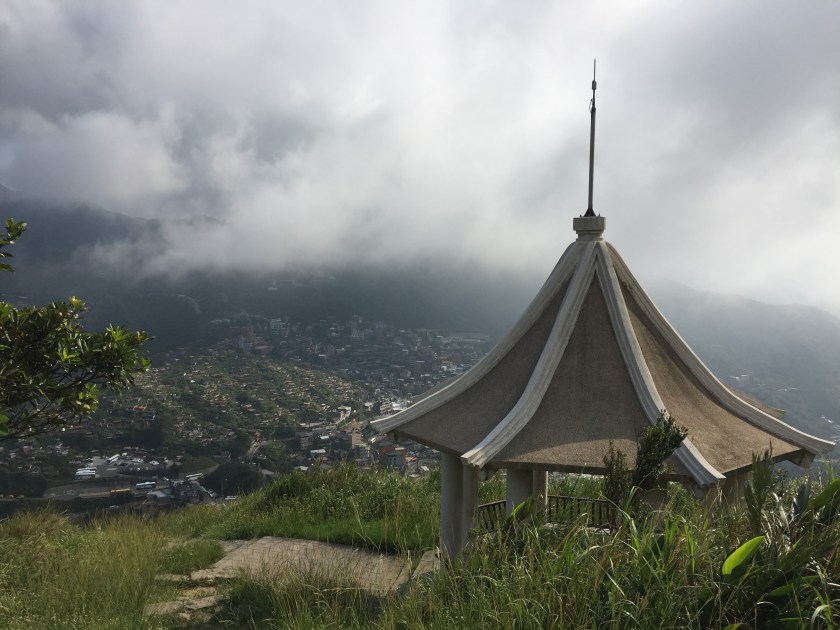 Once back down in the village, we made our way to the night market. While walking through the crowded streets, we snacked on local street food. Sausage on a stick with cloves of fresh garlic, samples of mysterious dried fruit, and popsicles took the edge off our hunger. I love getting lost in villages with tiny stone streets, not knowing what will be around the next corner, and being surprised with public verandas with gorgeous views. After watching the sunset over the bay, we went in search of dinner.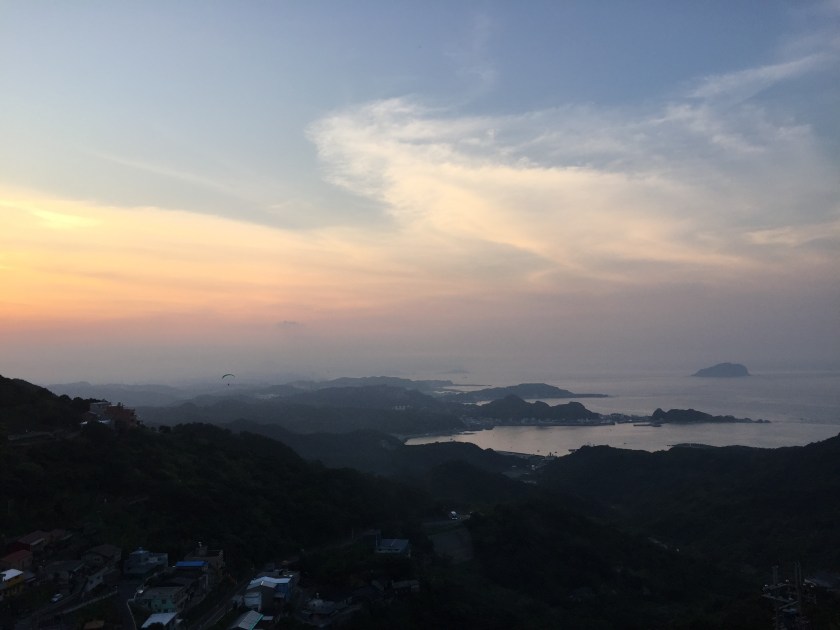
 maryghawley