Bullet Journal – 10 things I removed and why

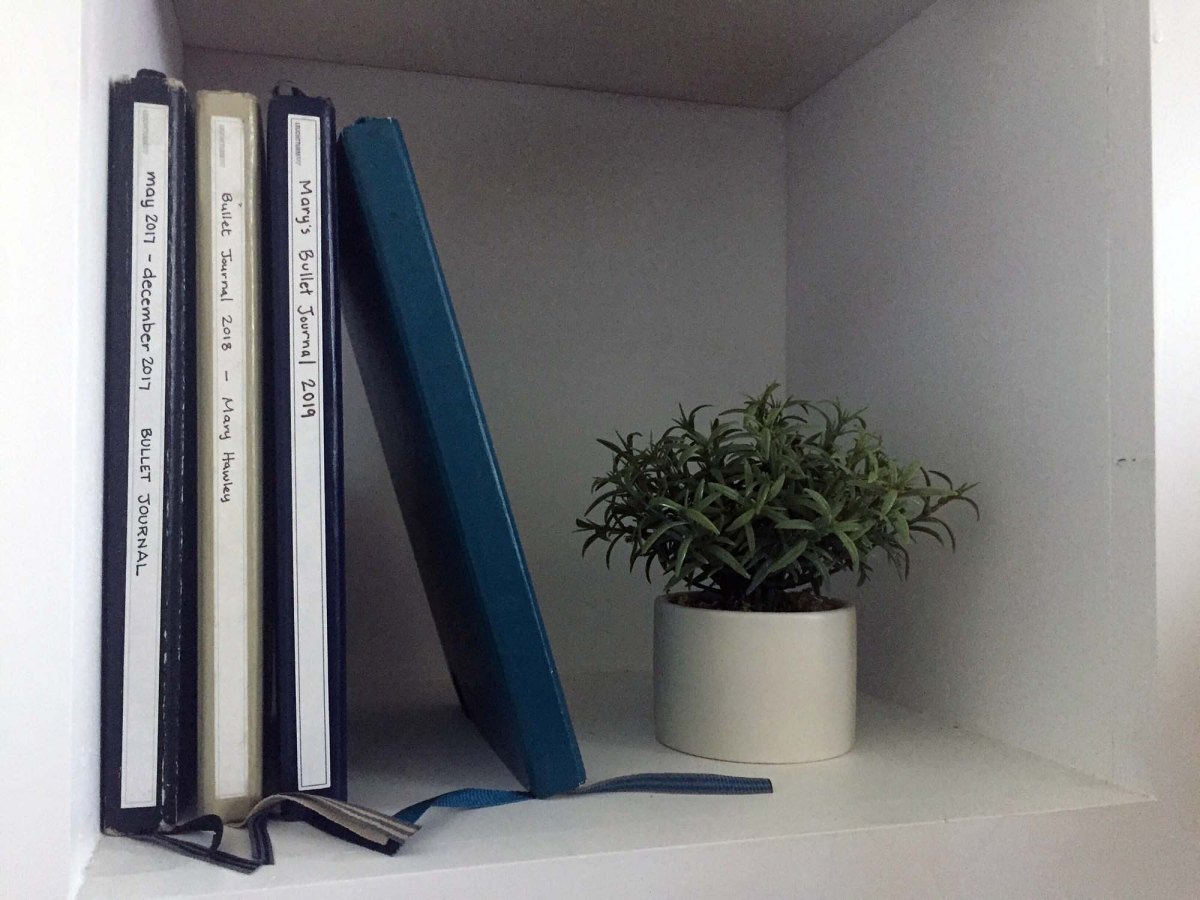
The Bullet Journal system has five kinds of layouts or collections: an Index, the Future Log, Monthly Logs, Daily Logs, and Custom Collections. Through trial and error, I discovered there is a good reason to keep your bullet journal simple.

If you look at social media for inspiration, you’ll find many beautiful spreads. I used many of these as templates in creating my own layouts. But making beautiful layout became too time-consuming. Other collection pages I added to my bullet journal but then realized they didn’t add value. This is a list of a few things I have stopped including in my bullet journal and why.

1. A Key

I have been bullet journaling long enough that I know my own system and don’t need to use the bullet key for reference. So I skip this page and save the pages at the beginning of my bullet journal for more useful information.

2. Complicated monthly themes

There is something exciting about planning a theme for an entire month. Thinking about all the little drawings and borders to include on each page for the month can be fun. But coming up with a new theme every month for years got old. And adding the month theme details to each page was too much work! Now the closest thing to a monthly theme is a different highlight color. The different colors are purely practical so that I can easily identify months when flipping through my bullet journal.

3. A Collection of Show and Movies I have watched

I thought that it would be a good idea to know what I have watched so I don’t watch it again. But Netflix already keeps a list of what I watch. Making a duplicate list didn’t prove to be beneficial.

4. Fancy Reading list Collection

In my first couple of bullet journals, I drew a picture of a bookcase with books on it and the title of what I read on those books. I also had a complicated color-coded method of marking when those books were read. Now I keep my reading list is a literal list format, and I read so much more!

5. Reflection/Brain dump pages

Longer writing can be done much faster in an electronic format. So instead of having unorganized blocks of text throughout my bullet journal, I keep all my reflections and more traditional journaling outside of my bullet journal.

6. Monthly Habit Trackers

These never worked for me. There always seemed to be too much flipping back and forth between pages. When I use my bullet journal on a daily basis, I look at that day’s log. I don’t always look at the monthly log. Tracking information on the monthly log just didn’t work for me.

7. Budget information

Monthly budget information is hard to record in a format that makes sense in a bullet journal. Keeping totals of spending categories requires math and a calculator. Budget information is much easier to track on a spreadsheet or an app specifically designed for budgeting.

8. Artwork

When I started my bullet journal, one of my goals was to have a place to keep all of my artwork. I really wanted to draw more and I thought that a bullet journal would help me to be more creative. Initially, it did. But as the mediums I used for artwork expanded, I couldn’t keep it in a bullet journal format.

9. Recipes

I love baking. Often I would jot down a recipe in my bullet journal. But once a bullet journal retires, I don’t like pulling it out again to reference the recipe. Now I keep all my recipes in their own notebook.

10. Difference Weekly Log layouts

I tried out so many different weekly log layouts. But once I found one that worked well, I don’t change it. In my current bullet journal, I use the same layout every week and it’s been helpful. Now when I flip through the journal looking for something, it is very easy to distinguish between different types of pages.

I hope these tips help you make your Bullet Journal work for your life. Happy journaling!

10 Most Recommended Nonfiction Books

Looking for your next inspiring read? These 10 books impacted the way I think about success and life. Many have been read more than once!

1. Grit: The Power of Passion and Perseverance by Angela Duckworth

Explains why we should do hard things and why it is good to embrace challenges rather than fear them.

I read this book after a career change and six months into my first software developer gig. Half a year was plenty of time to realize that I hated software development. Doing hard things is important, but you should also know when to quit. Grit talks about sticking to the difficult thing until the natural ending point. This helps increase your grittiness, but doesn’t prolong your misery longer than necessary. I decided to give that job a year, for the experience, and then looked for something that better suited my personality.

2. Your Brain at Work: Strategies for Overcoming Distraction, Regaining Focus, and Working Smarter All Day Long by David Rock

An in-depth look at how the brain sorts, prioritizes, organizes, and acts on information. Shows why certain tasks, like prioritizing and switching between tasks, can be so draining. Also, gives practical tips on how to make our brains work smarter.

Learning about sections of the brain like the basal ganglia and prefrontal cortex, was enlightening. Now I know why my brain does certain things! Super cool read if you find the brain fascinating.

3. The Life-Changing Magic of Tidying Up: The Japanese Art of Decluttering and Organizing by Marie Kondo

The basic premise – get rid of everything that doesn’t spark joy. Outlines how to deal with your material belongings and keep only the items that matter.

If you feel stuck, reading this and putting into practice its recommendations, can help you get unstuck. Helped me clear my mind and redefine my goals

Tip: Read this book before you move. If you do, you will own less, and moving will be much easier.

4. Essentialism: The Disciplined Pursuit of Less by Greg McKeown

How to filter out the nonessential, and focus on what truly matters.

This was one of the books that made me think about changing careers when I worked in accounting.

Favorite quote:

“If you don’t prioritize your life, someone else will.”

5. The Obstacle is the Way – by Ryan Holiday

Pulling from the philosophy of stoicism, this book explores the idea that the obstacles we face shape us. Therefore, those obstacles should be embraced as opportunities for growth.

As someone who doesn’t like change, but thrives on routine and security, The Obstacle is the Way challenged how I perceive challenges.

6. Burnout: The Secret to Unlocking the Stress Cycle by Emily Nagoski and Amelia Nagoski

A great book on emotional burnout. Geared specifically towards women and how their burnout is unique. Looks at stress and how people get stuck because they can’t complete the stress cycle.

Two big takeaways from this book were: the importance of exercise and sleep to reduce stress and the idea of human beings versus human givers.

7. The 4-Hour Workweek: Escape 9-5, Live Anywhere, and Join the New Rich by Timothy Ferriss

The book that launched many digital nomad dreams. At its core, this book is about lifestyle design and how to work more efficiently.

Reading this book made me realize that there was another way to live and that I should dream bigger. This was the second book that prompted a career change in my thirties.

8. Atomic Habits: An Easy & Proven Way to Build Good Habits & Break Bad Ones by James Clear

A book about small, but important habits. It outlines how to create good habits, using methods like habit stacking. This book is a fantastic audiobook, which is read by the author and begins with a gripping story of the author’s own life.

I have read many books on habits, and this one is my favorite! Very practical and inspiring. I like to read it every couple of years, or whenever I need to change my habits.

9. Rising Strong: The Reckoning. The Rumble. The Revolution by Brene Brown

We are all going to fall or fail. That is a given. This book is about what happens after that fall.

One summer I cried multiple times every week. After a really difficult year, which ended in disappointment, this book helped me get back up again. It was instrumental in learning to dream again.

10. Word by Word: a daily spiritual practice by Marilyn McEntyre

A book of meditations on individual words. Broken into weekly sections. Sometimes I need a whole week to think about what it means to “listen”, or “dare”. This book is inspiring and comforting, and after many reads, has become like an old friend.

10 Unexpected Benefits of a Bullet Journal

When I started my bullet journal in 2016, I had two goals:  a centralized place to store my drawings and to create some self-imposed structure for learning web development. But those goals morphed quickly. Just as I have changed through the years, the reasons I keep a bullet journal have changed too.

A lot has happened in the last four years, and keeping a bullet journal has resulted in some unexpected benefits.

1. Thankfulness

Every year I create a “things I want to do” list. I was looking through my first bullet journal recently and realized that I have actually done 4 things on my 2016 bucket list! Those four items didn’t get transferred into more recent journals and I had forgotten about them. But the realization that there were four things I was working towards in 2016 that I am either currently doing or have done in the last four years made me incredibly thankful for the life that I get to live.

2. A documented personal history

Writing down information about your days and weeks creates an incredible record of your life. I tend to forget past events easily. But whenever I flip through one of my old bullet journals, memories come rolling back. When an important event occurred is easily remembered because everything was recorded when it happened.

5. Insights on what makes you happy

Do you have a 5-year plan? I did. I was going to be a self-taught web-developer digital nomad who traveled the world. It was going to be so exciting! After reading “The 4-Hour Work Week: Escape the 9-5, Live Anywhere and join the New Rich” by Timothy Ferriss, and following blogs by people who were successfully digital nomads, I decided that it was the life for me. If other people were successfully traveling and working, I figured I could too.

But just because someone else thrives in a trendy lifestyle, doesn’t mean its right for you. Fortunately, I found this out early in my 5-year plan. After multiple trips that left me mentally and emotionally exhausted, I realized that solo longterm travel was not for me. For someone with my personality type, routine and stability are necessary for happiness.

4. Mindfulness

Keeping a bullet journal makes me pay attention to my days, weeks, and years. At the beginning of each week, I always create a new weekly spread. This makes me really think about what is happening that week, taking note of how I feel, what I need to do, the places I need to go. Every day, I write down what is important for that day. Focusing on one day at a time has made me more conscientious about how I live out my days. There is a quote by Annie Dillard that I love and beautifully illustrates the importance of how we structure our days.

“How we spend our days is, of course, how we spend our lives. What we do with this hour, and that one, is what we are doing. A schedule defends from chaos and whim. It is a net for catching days. It is a scaffolding on which a worker can stand and labor with both hands at sections of time. A schedule is a mock-up of reason and order—willed, faked, and so brought into being; it is a peace and a haven set into the wreck of time; it is a lifeboat on which you find yourself, decades later, still living.” – Annie Dillard, The Writing Life

5. Peace of mind

I don’t have to worry about forgetting important events. Everything is recorded in the bullet journal. By taking the time to plan each month, I know exactly what events are coming up. Nothing that can be schedule takes me by surprise anymore. All my bills are paid on time, birthdays don’t sneak up on me, and I don’t have that nagging feeling that I am forgetting something important.

6. More productive

Productivity should be a given when it comes to keeping a bullet journal but wasn’t my goal when I started. I love making lists and getting that dopamine release when I cross off an item. But before using a bullet journal, I lost most to-do lists before finishing them. Keeping all of my to-do lists in a single place, organized by month, week, and day helps me get way more done.

7. Goal Tracking

I like to have a list of micro-goals, smalls things like daily habits, and macro-goals that are perhaps a bit more lifechanging. Keeping track of my goals has been insightful because it has shown me what I actually find valuable. This, in turn, has lead to more impactful goals.

8. It’s a great traveling companion

On trips, I always take my bullet journal. Before the trip, I also use it to create packing lists and keep my travel itinerary. While waiting in airports or taking a break at a coffee shop, I love to write down notes about my experiences. Sometimes I will illustrate some of my favorite things about the trip. Writing down even a line or two about the trip helps me remember it more clearly in the future.

9. Better Health

A bullet journal is a great way to track health issues. I have quite a few food allergies. While working with a doctor, I was able to use my bullet journal to track food intake and symptoms. By keeping a meticulous health log for a year, I was able to improve both my physical and emotional health.

10. Helps prevent boredom

In my bullet journal, I keep a list of things that I think are fun or know I enjoy. Things like books I want to read, local places I have never visited, and sewing projects I would like to do. Whenever I find I need something to do, a quick look at my journal gives me plenty of inspiration. If that fails, I can always take those quiet moments to add to my bullet journal and create something beautiful.

Happy bullet journaling folks!